


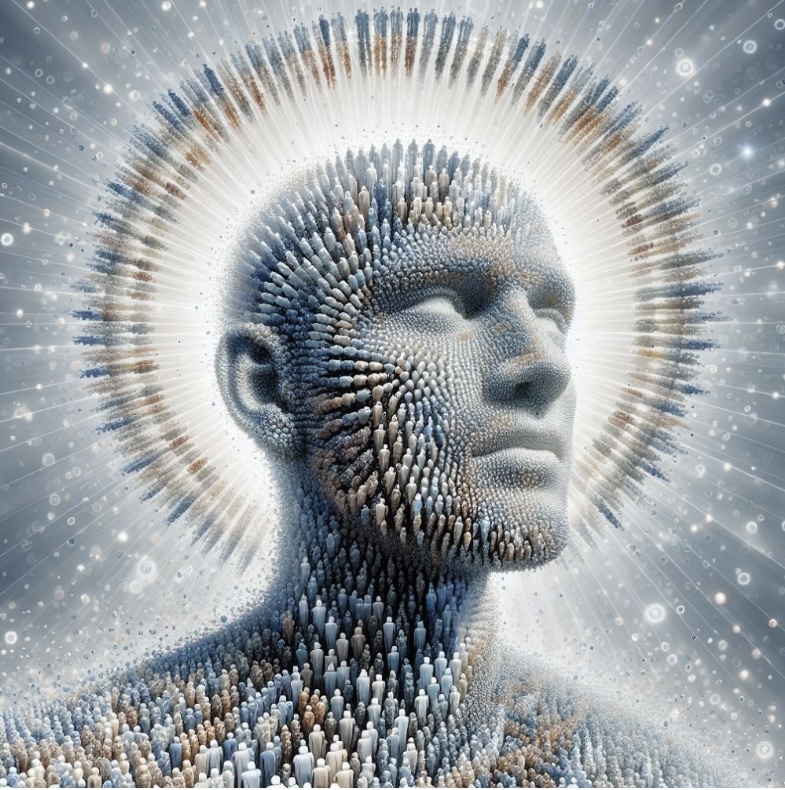
From The Doctrines For Spiritual Christianity
Since a person has in him three degrees of love and wisdom and consequent useful endeavor, it follows that he has in him three degrees of will and intellect and consequent resolve, and thus of a determination to a useful end. For the will is the receptacle of love, and the intellect the receptacle of wisdom, and the resolve is the useful result springing from them. It is apparent in consequence of this that every person has in him a natural, spiritual and celestial will and intellect, potentially from birth, and actually as they are opened. In a word, from creation and thus from birth, the human mind, which consists of will and intellect, exists in three degrees, so that a person has a natural mind, a spiritual mind, and a celestial mind. (Divine Love and Wisdom 239)
As in the rational, so in the natural, there are things which are of the will and things which are of the understanding. The things in the natural that have relation to the will are delights, and those which have relation to the understanding are memory-knowledges, and in order to be something these two must be conjoined together. (Arcana Coelestia 3519)
The universe is divided in general into two worlds, one spiritual and one natural. Inhabiting the spiritual world are angels and spirits. Inhabiting the natural world are people. These two worlds are totally alike in their outward aspect – so alike that they cannot be distinguished – but in their inward aspect they are entirely unalike. The people who inhabit the spiritual world – who, as we said, are called angels and spirits – are themselves spiritual, and because they are spiritual, they think spiritually and speak spiritually. In contrast, people who inhabit the natural world are natural, and therefore they think naturally and speak naturally; and spiritual thought and speech have nothing in common with natural thought and speech. (Divine Love and Wisdom 163)
What the natural man is, and what the spiritual man. A man is not a man from the face and body, but from the understanding and the will, and therefore by the natural man and the spiritual man is understood his understanding and will which are either natural or spiritual. The natural man as to his understanding and will is like the natural world, and may also be called a world or microcosm; and the spiritual man as to his understanding and will is like the spiritual world, and may also be called a spiritual world or heaven. From this it is clear that because the natural man is a natural world in a certain image, he loves the things of the natural world, and that because the spiritual man is a spiritual world in a certain image, he loves those things belonging to that world or heaven. The spiritual man, indeed, also loves the natural world, but in no other way than a master loves his servant through whom he performs uses. According to uses also the natural man becomes like the spiritual, which happens when the natural man feels the delight of uses from the spiritual man. This natural man may be called natural-spiritual. The spiritual man loves spiritual truths. He loves not only to know and understand them, but he also wills them; but the natural man loves to speak of those truths and also to do them. To do truths is to perform uses. This subordination is from the conjunction of the spiritual world and the natural world. For whatever appears and is done in the natural world derives its cause from the spiritual world. From these considerations it may be established that the spiritual man is altogether distinct from the natural man, and that no communication occurs between them other than such as there is between cause and effect. (Divine Love and Wisdom 251)
Every man has two minds, one natural and the other spiritual; and as it is the mind that wills and thinks, every man has also natural will and thought and spiritual will and thought. The natural mind wills and thinks like a man in the world, and the spiritual mind wills and thinks like an angel in heaven. From this it follows that as faith is in man, it, too, is natural or spiritual; and that natural faith is according to man’s will and thought in the world, and spiritual faith is according to his will and thought in heaven. It is said the will and thought, because all things from which man is a man have relation to these two, for from the will he acts, and from the thought he speaks. And as a man acts and speaks either from self or from God, so he wills and thinks either from self or from God. From this it is clear, in the first place, that there is natural faith and spiritual faith; and that natural faith apart from spiritual faith is to think such things as are in the Word from self, while natural faith from spiritual faith is to think such things as are in the Word from God; although this also seems to the man to be from himself. As every man has two minds, a natural and a spiritual, and the natural mind is opened and formed by such things as are in the world, while the spiritual mind is opened and formed by such things as are in heaven, and as the things that are in heaven are all spiritual, so a man’s spiritual mind must needs be opened and formed by such things as are in the Word, in which all things are spiritual because they are Divine. In the Word there are truths that are to be known and thought, and goods that must be willed and done; therefore it is by these goods and these truths that man’s spiritual mind is opened and formed. From this it follows, that unless the spiritual mind is opened and formed by truths and goods from the Word it remains closed; and when this is closed the natural mind only is opened and formed by such things as are in the world, from which man, indeed, derives a natural lumen, but such as has in it no wisdom from heaven. From this it is clear, in the second place, that faith is not faith so long as the natural mind only is opened, but that if the thought that a thing is so is called faith it is historical faith, which is nothing but knowledge from which the natural man thinks. (Apocalypse Explained 790{3-4})
Key Points From The Video
Comprehending the Doctrine: Applying the principles of spiritual influx and of how objects are created in the natural world is difficult due to the fallacies that arise from being immersed in space and time.
Perceptions of the Spiritual and Natural Worlds: The creation of objects in the spiritual and natural worlds is identical. Both worlds are representative worlds, with objects as effects corresponding to mental spheres, produced by the influx of Divine life that terminates in sentient faculties.
The Nature of Divine Influx: The truth about how Divine influx works opposes the false conclusions drawn by the natural mind concerning the appearances of things, reversing erroneous conclusions.
The Transition from Natural to Spiritual State: Death is passage from a natural state of the will and intellect into a spiritual state and occurs when the former state has run its course.
Multiple Choice Questions
1. What is one of the most magnificent revelations made to humanity?
a. the discovery of quantum physics
b. the teaching that a representative world of sensuous objects is created through spiritual influx
c. the invention of the printing press
d. the formulation of the theory of evolution
Answer b )
2. Why is it more difficult to comprehend the doctrine of spiritual influx when applied to the natural world?
a. because the spiritual world is more logical
b. because the natural world is too complex
c. because the doctrine is not meant to apply to the natural world
d. because those in the natural world are deeply immersed in its space and time
Answer d )
3. What mistaken belief do people tend to have about the objects of the natural world?
a. that they are illusions created by the mind
b. that they are infinitely malleable
c. that they exist independently of the mental life of human beings
d. that they are all connected to a higher power
Answer c )
4. What is the true nature of the supposed two worlds (spiritual and natural)?
a. they are fundamentally different in their origins and nature
b. they are merely two distinct states of the will and intellect, appearing identical in their external forms
c. they are reflections of each other, but one is more real than the other
d. they are entirely separate and unconnected realms of existence
Answer b )
What is death from the perspetive of Spiritual Christianity?
a. the final end of existence
b. a punishment for sins committed in life
c. nothing more than the passage from a natural state of the will and intellect into a spiritual state
d. a random and unpredictable event
Answer c )
Reflective Questions
1. How do you typically understand the relationship between your thoughts and feelings and the external world around you? Does this understanding align with the doctrine of spiritual influx, or do you tend to see the external world as existing independently of your mind?
2. Can you identify specific instances where your immersion in space and time might be distorting your perception of reality? How can you actively challenge these distortions and cultivate a more spiritual perspective?
3. How does the understanding that both the natural and spiritual worlds are products of Divine life manifesting through the sentient faculties change your appreciation for the beauty and wonder of the natural world?
Experiential Integration
Daily Perception Shift Practice: Choose a simple object in your environment (e.g., a flower, a piece of fruit, a stone, a chair). For 5 minutes, observe it closely, paying attention to its shape, colour, texture, and smell.
As you observe, consciously remind yourself that this object is not merely a static, independent entity, but rather a manifestation of Divine creative life flowing through your sentient faculties. Try to connect with the spiritual qualities or principles that this object might represent (e.g., beauty, growth, harmony).
Keep a record of your observations and reflections in a journal.
Further Exploration
All things in heaven bear relation to good and the derivative truth, whereas all things in hell bear relation to evil and the derivative falsity; hence likewise in man, all things with him which are from heaven bear relation to good and truth, but all things with him which are from hell bear relation to evil and falsity. Or, what is the same, all things with man which are from the Lord bear relation to good and truth, but all things which are from man himself bear relation to evil and falsity. Now as these are the things to which all things in the universe bear relation, and man is a receptacle of them, therefore there are two things with man which receive them, one called the will, and the other the understanding. The will is the receptacle of good or of evil, and the understanding is the receptacle of truth or of falsity. The will which is from the Lord, which is also called the new will, is the receptacle of good; whereas the understanding which is from the Lord, which is also called the new understanding, is the receptacle of truth. But the will which is from man’s own, and is also called the old will, is the receptacle of evil, and the understanding which is from man’s own, and is also called the old understanding, is the receptacle of falsity. Into this understanding and into this will, man is born from his parents; but into the former understanding and into the former will, man is born from the Lord, which is done when he is being regenerated. For when a man is being regenerated, he is conceived and born anew. (Arcana Coelestia 10122{2})
Awakening one morning, I fell to thinking about some questions having to do with conjugial love, coming finally to this one: In what region of the human mind is truly conjugial love seated, and in what region, therefore, coldness in marriage? I knew that the human mind is divided into three regions, one above the other, and that natural love resides in the lowest region, spiritual love in the next higher one, and celestial love in the highest. I knew also that in each region there is a marriage of good and truth, and because good has to do with love, and truth with wisdom, that in each region there is a marriage of love and wisdom; moreover, that this marriage is the same as a marriage of the will and understanding, since the will is the recipient vessel of love, and the understanding the recipient vessel of wisdom. While I was deep in thought on this question, I suddenly saw two swans flying towards the north, and presently two birds of paradise flying towards the south, and then two turtledoves flying in the east. Following their flight with my eyes, I next saw the two swans veer their course from the north to the east, likewise the two birds of paradise from the south, until they met up with the pair of turtledoves in the east. Then together they flew towards a certain lofty palace there, rising in the midst of olive trees, palms and beeches. The palace had three rows of windows, one above another; and as I watched, I saw the birds fly into the palace – the swans through windows standing open in the lowest row, the birds of paradise through windows open in the middle row, and the turtledoves through windows open in the highest row. After I witnessed this event, an angel stood beside me and said, “Do you understand the things you have seen?” “A little,” I replied. “The palace,” said the angel, “represents the abodes of conjugial love as these exist in human minds. Its highest level – into which the turtledoves disappeared – represents the highest region of the mind, where conjugial love resides in the goodness of love together with its wisdom. The middle level – into which the birds of paradise disappeared – represents the intermediate region, where conjugial love resides in a love of truth together with its intelligence. And the lowest level – into which the swans disappeared – represents the lowest region of the mind, where conjugial love resides in a love of what is just and right together with its knowledge. “These degrees are also symbolized by the three pairs of birds – the two turtledoves symbolizing conjugial love in the highest region, the two birds of paradise conjugial love in the intermediate region, and the two swans conjugial love in the lowest region. The three kinds of trees surrounding the palace – the olive trees, palms and beeches – symbolize the same. “In heaven we call the highest region of the mind celestial, the intermediate one spiritual, and the lowest one natural. And we conceive of them as being like apartments in a house, one above another, with steps going up from one to the next, like stairs. Moreover, on each level there are as it were two sets of rooms, one for love, one for wisdom, with a bedroom, so to speak, in front, where they come together in bed – love with its wisdom, or good with its truth, or to say the same thing, the will with its intellect. In such a palace, all the mysteries of conjugial love become visible as though in effigy.” Hearing this, being fired with a desire to see one, I asked whether a person might go in and look at the palace there, since it was a representational one. The angel replied that only angels in the third heaven could, because for them every representation of love and wisdom becomes real. “What I have related to you I have heard from them,” he said, “including as well the following, that truly conjugial love resides in the highest region, in the midst of mutual love in the chamber or apartment of the will, and at the same time in the midst of perceptions of wisdom in the chamber or apartment of the intellect; and these come together in bed in a bedroom that is located in front on the east side.” “Why,” I asked, “are there two chambers?” “Because,” he said, “a husband lives in the chamber of the intellect, and a wife lives in the chamber of the will.” At that I inquired, “If that is where conjugial love resides, where then does coldness in marriage reside?” “It, too, resides in the highest region,” he replied, “but only in the chamber of the intellect, with the chamber of the will on that level being closed off. For as often as it pleases, the understanding with its truths can ascend by a spiral stairway to its chamber in the highest region; but if the will with the goodness of its love does not ascend at the same time to its companion chamber, the latter remains closed, and coldness develops in the other, which is the coldness one finds in marriage. “As long as such coldness to one’s wife continues, the intellect looks down from the highest region to the lowest; and if fear does not hold it back, it also descends in order to warm itself there with an illicit fire.” Having said this, the angel wished to tell me still more about conjugial love from the depictions of it in that palace; but he said, “Enough for now. First investigate whether these concepts are beyond people’s general comprehension. If they are, what is the use of saying more? On the other hand, if they are not, more will be disclosed another time.” (Conjugial Love 270{1-6})
Changes of state there, to which morning, midday, evening, and night correspond, are not attributable to the sun there, for that sun is always radiating heat and light, that is, the good of love and the truth of faith. Instead those changes are attributable to the recipients, that is to say, to the angels and spirits, who move through a regular cycle of such changes as their life progresses. At one point it is morning, that is, they are filled with the good of love; at another it is midday, that is, they are enlightened with the truth of faith; and at yet another it is evening and night, that is, these gifts become vague and dull with them. [5] The reason why the situation in the world is as it is in heaven, except for the difference that in the world the regular cycle consists of states belonging to the fumes of day, while in heaven it consists of states of life, is that all things in the world have been created in the image of those in heaven. For natural things arise from spiritual ones as effects from their causes. Consequently there is a correspondence of all things in the world with those in heaven, and therefore the whole natural order is nothing other than a theatre representative of the Lord’s kingdom, 3483, 4939, 8211. (Arcana Coelestia 8812)